
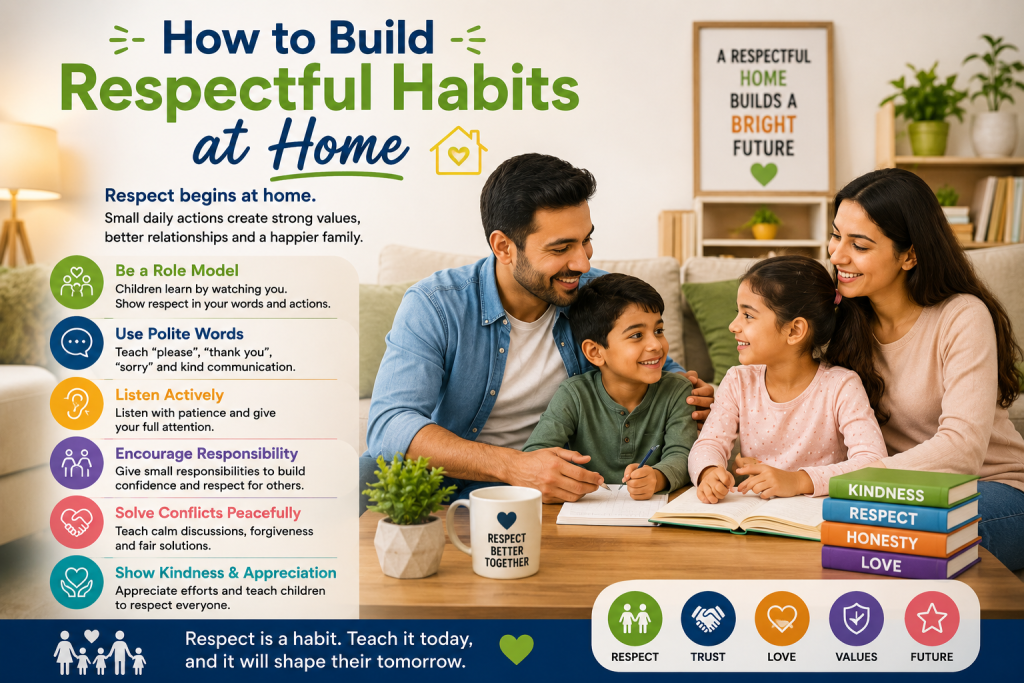
Respect is one of the most important values parents can teach their children. It helps build strong family relationships, encourages kindness, and creates a peaceful home where everyone feels valued. Children are not born knowing how to be respectful—they learn by observing the people around them and practicing respectful behavior every day.
When respect becomes part of daily family life, children develop better communication skills, stronger self-confidence, and healthier relationships with others. They also learn to appreciate differences, solve problems peacefully, and become responsible members of society.
At Children House, we believe that respect begins at home. By creating a caring and supportive environment, parents can help children develop respectful habits that will benefit them throughout their lives.
Why Respect Is Important at Home
Respect is the foundation of every healthy family relationship. When parents and children treat each other with kindness and understanding, the home becomes a place where everyone feels safe, loved, and appreciated.
Children who grow up in a respectful environment learn how to express themselves politely, listen to others, and solve disagreements without anger. They are also more likely to show empathy, cooperate with others, and develop positive social skills.
A respectful home does not mean that everyone always agrees. Instead, it means family members communicate calmly, value each other’s opinions, and work together to solve problems.
Benefits of Respect at Home
- Builds trust between family members
- Encourages kindness and empathy
- Improves communication
- Reduces family conflicts
- Strengthens emotional well-being
- Helps children develop confidence
Be a Positive Role Model
Children learn more from what they see than from what they are told. Parents who treat others with respect naturally inspire their children to do the same.
Show respect by speaking politely, listening without interrupting, keeping promises, and treating every family member with kindness. Children notice these actions and begin to copy them in their own behavior.
Parents should also show respect toward teachers, neighbors, grandparents, and community members. This teaches children that respect should be given to everyone, regardless of age or background.
Simple Ways to Be a Role Model
- Speak calmly during disagreements.
- Say “please” and “thank you.”
- Apologize when you make a mistake.
- Listen carefully when someone is talking.
- Show appreciation for others.
Teach Good Manners Every Day
Good manners are simple habits that show respect for others. Teaching children polite behavior from an early age helps them develop confidence and positive social skills.
Parents can encourage children to use polite words in daily conversations. Saying “Good morning,” “Please,” “Thank you,” and “Excuse me” should become natural habits.
Good manners also include respecting personal space, waiting for one’s turn, sharing with others, and speaking kindly even when upset.
Everyday Manners Children Should Learn
- Greet people politely.
- Say “Please” and “Thank you.”
- Wait patiently for their turn.
- Respect other people’s belongings.
- Knock before entering a room.
Encourage Kind Communication
Respectful communication helps create a peaceful and supportive home environment. Children should feel comfortable expressing their thoughts while also learning to respect the opinions of others.
Parents can encourage healthy communication by listening carefully, avoiding criticism, and speaking with patience. When children feel heard, they are more likely to communicate honestly and respectfully.
Teach children to disagree politely without shouting or using hurtful words. Explain that different opinions are normal and should always be discussed with kindness.
Practice Active Listening
Listening is one of the greatest signs of respect. When parents listen carefully to their children, they show that their feelings and ideas are important.
Practice active listening by making eye contact, putting away distractions, and giving children your full attention. Repeat or summarize what they have said to show that you understand.
Children who feel listened to become better listeners themselves and develop stronger relationships with others.
Create Family Rules Together
Children are more likely to follow rules when they help create them.
Sit down as a family and discuss simple household rules such as:
- Speak politely.
- Respect everyone’s privacy.
- Help with household chores.
- Listen when others are speaking.
- Solve problems peacefully.
Displaying these rules in a visible place reminds everyone to practice respect every day.
Encourage Responsibility
Giving children responsibilities teaches them respect for themselves, their family, and their home.
Simple responsibilities include:
- Making their bed
- Cleaning their room
- Organizing school supplies
- Feeding pets
- Helping prepare meals
- Watering plants
Completing responsibilities builds confidence and teaches accountability.
Resolve Conflicts Peacefully
Disagreements are normal in every family. What matters is how they are handled.
Parents should remain calm, listen to everyone’s point of view, and encourage respectful discussions instead of arguments.
Teach children that apologizing, forgiving others, and finding fair solutions are important parts of healthy relationships.
Conflict resolution is a valuable life skill that helps children build stronger friendships and family connections.
Spend Quality Time Together
Respect grows stronger when families spend meaningful time together.
Simple family activities include:
- Reading books
- Playing board games
- Cooking together
- Going for walks
- Gardening
- Watching educational programs
- Sharing meals
These activities improve communication and create lasting memories.
Teach Gratitude and Appreciation
Children who appreciate others naturally become more respectful.
Encourage your child to thank teachers, family members, friends, and anyone who helps them.
Parents can also create a daily gratitude habit by asking children to share something they are thankful for each evening.
Gratitude develops kindness, humility, and emotional well-being.
Respect Differences
Every person has unique talents, interests, and opinions.
Teach children to respect people regardless of their age, culture, religion, language, or abilities.
Help them understand that kindness and respect should be shown to everyone, even when opinions differ.
This lesson prepares children to become caring and responsible members of society.
Praise Respectful Behavior
Children repeat behaviors that receive positive attention.
Whenever your child demonstrates respect, acknowledge it with encouraging words such as:
- “I’m proud of how politely you spoke.”
- “Thank you for helping your sister.”
- “You showed great respect today.”
Positive reinforcement motivates children to continue making good choices.
Limit Negative Influences
Children’s behavior is influenced by what they watch, hear, and experience.
Monitor television programs, social media, video games, and online content to ensure they promote positive values.
Encourage educational activities, reading, outdoor play, and family conversations instead of excessive screen time.
A positive environment supports respectful behavior.
How Children House Encourages Respect
At Children House, respect is one of our core values. We help children develop positive character through:
- Kind and supportive teachers
- Positive classroom rules
- Teamwork activities
- Character education
- Interactive learning
- Creative play
- Parent partnerships
- Individual attention
We believe that respectful children become confident learners, responsible citizens, and compassionate leaders.
Benefits of Building Respectful Habits at Home
Children who grow up in respectful homes are more likely to:
- Build strong family relationships
- Develop confidence
- Improve communication skills
- Solve problems peacefully
- Show kindness and empathy
- Respect teachers and classmates
- Become responsible individuals
- Perform better in school
- Build lifelong positive values
- Contribute positively to society
Frequently Asked Questions (FAQs)
How can parents teach respect at home?
Parents can teach respect by setting a positive example, using polite language, listening carefully, praising respectful behavior, and encouraging kindness every day.
Why is respect important for children?
Respect helps children build healthy relationships, communicate effectively, solve conflicts peacefully, and become responsible adults.
What are simple respectful habits children should learn?
Children should learn to say “please” and “thank you,” listen without interrupting, respect others’ belongings, apologize when necessary, and help family members.
How does family communication build respect?
Open and respectful communication creates trust, improves understanding, and teaches children to express themselves politely.
Can schools help children develop respect?
Yes. Schools and educational centers like Children House reinforce respectful behavior through teamwork, positive discipline, and character-building activities.
Conclusion
Building respectful habits at home is one of the greatest gifts parents can give their children. Respect is not taught through lectures alone—it is learned through daily actions, positive examples, and meaningful family relationships. Every polite word, thoughtful action, and act of kindness helps shape a child’s character and prepares them for future success.
Parents play the most important role in creating a respectful home environment. By speaking kindly, listening patiently, encouraging responsibility, and treating others with fairness, they teach children values that will stay with them throughout their lives. Respectful children are more confident, compassionate, and better equipped to build healthy relationships at school, at home, and in their communities.
At Children House, we are committed to helping families nurture children who are not only academically successful but also respectful, responsible, and kind. Together, parents and educators can build a strong foundation of respect that empowers children to grow into thoughtful individuals and positive contributors to society.